Psilocybin and longevity
DeepDive PodcastEpisode #1
Playlist1/2
Transcript following paused
The conversation discusses preclinical findings in cells and mice and their limitations. It does not establish a lifespan-extending effect in humans.
Full transcript
Welcome to The Deep Dive. Today, we're digging into something pretty fundamental, a question humans have asked forever, really. Is ageing just inevitable, set in stone, or can we actually, you know, influence it, maybe slow it down?
It's a huge question, and yeah, traditionally, we've kind of accepted it as a given, but the research we're looking at today, it offers a really different angle. Pretty exciting one.
Definitely exciting. We're diving into research that feels, well, groundbreaking. Most people hear psilocybin and think mental health, right?
That's the common association.
But what if it also holds a key to, like, a longer, healthier, physical life? We're focusing on this pivotal new study out of Emory University. It's published in Nature Partner Journals, npj Aging, and honestly, it challenges a lot of the standard thinking about ageing, about lifespan itself.
Yeah. So, our mission today is really to unpack what they found, these pretty surprising results, and then explore how the biology behind psilocybin's potential anti -aging stuff, you know, at the cellular level, and bigger picture. And finally, think about what this could actually mean for, well, for healthy living down the road.
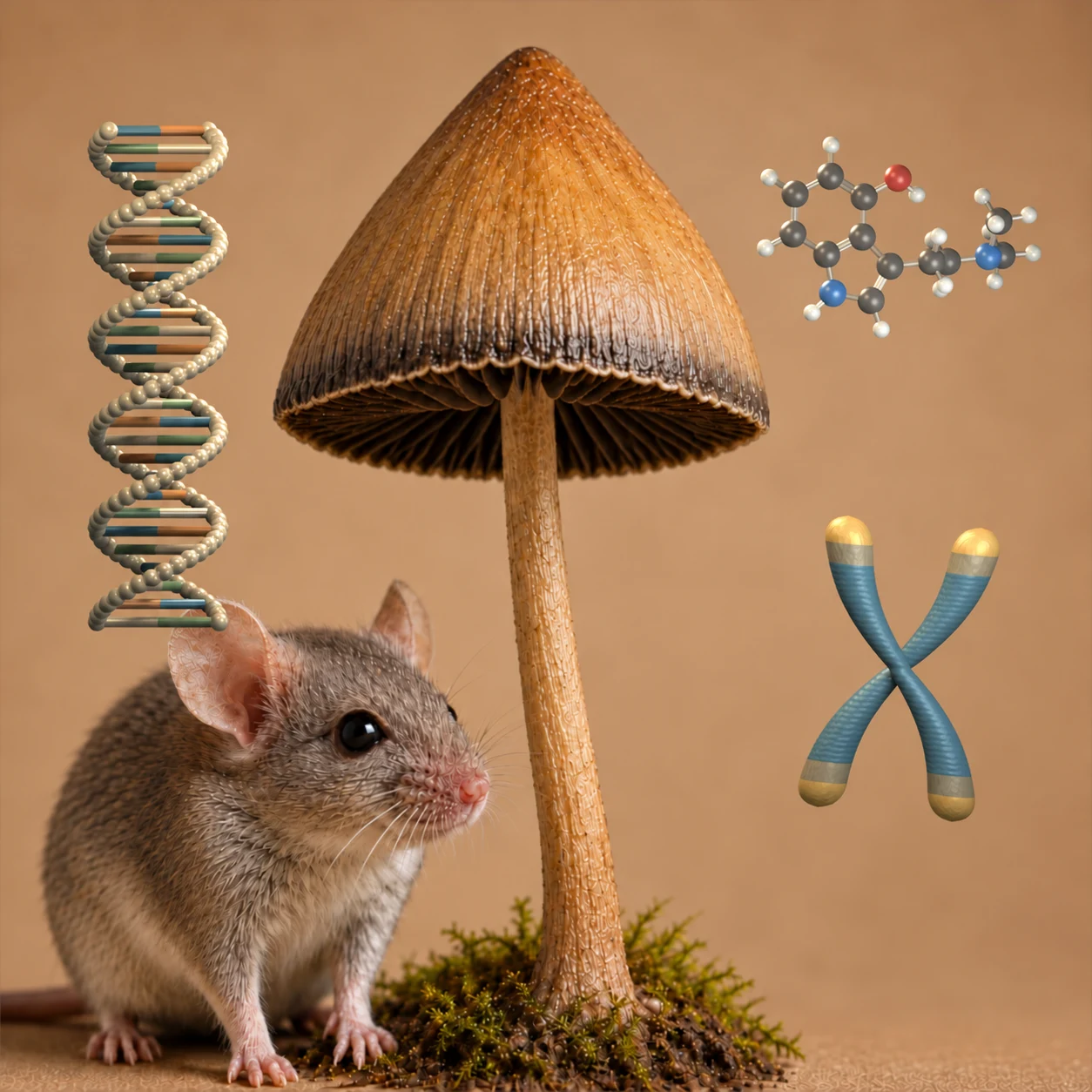
Okay, let's get right to it then, the big takeaway. The main conclusion from this Emory study is pretty bold. Psilocybin, or technically its active form, psilocin, seems to actively delay ageing in cells, and even in whole organisms.
It's a strong claim, and they started in vitro, so looking at cells in the lab, not in the living body yet.
Right, in petri dishes.
Yeah.
And what they saw there was, well, kind of staggering. They used human skin cells, lung cells, and psilocin extended their lifespan, their cellular lifespan, by over 50%.
50 %!
Yeah. I mean, think about that. That's not just tweaking things a little bit. That's a major shift in the dish.
A huge shift. And it suggests something pretty profound is happening chemically, but of course, the next step is crucial. Does it work in a living system?
Exactly. So they moved on to an in vivo study, which just means in the living. In this case, mice.
And this was actually the first long -term study looking at psilocybin's systemic effects on ageing in vivo. That's important.
And these weren't young mice they started with. They were about 19 months old.
Which is roughly like a 60 or 65 year old human. So already well into ageing.
Right. And the setup was they got an initial low dose, 5 milligrams of psilocybin. Then, for the next 10 months, a higher dose, 15 milligrams once a month.
Okay.
And the result, the mice getting the psilocybin, they lived 30 % longer. A 30 % increase in survival compared to the control mice.
Wow. 30 % is? That's substantial in a survival study like this.
It really is. But here's what I found maybe even more interesting. It wasn't just longer life. It seemed to be better life quality too. The study mentions they showed healthier physical features.
Like what specifically?
Things like the fur looked better, fewer white hairs popped up, and apparently they even saw some hair regrowth.
That's fascinating. It ties right into what Dr. Ali John Zarrabi, one of the researchers, talks about. He’s a palliative care physician-scientist. And his perspective is that the goal shouldn't just be adding years, you know, regardless of quality. It's about better aging, keeping function, keeping dignity.
Right, that quality of life piece.
Exactly. And these physical markers, the fur, the hair, they suggest it's not just keeping them alive longer, but keeping them healthier while they're alive longer. Adding life to the years, not just years to the life.
That's such a key difference. So, okay, the big question then is how? How is psilocybin doing this biologically? The study says it influences multiple hallmarks of aging, not just one thing.
Right. It's hitting several key areas. The researchers pinpointed three main mechanisms. First, it seems to cut down on oxidative stress.
Okay. Oxidative stress. There's basically like cellular damage from unstable molecules, right? Rusting from the inside almost.
That's a pretty good analogy. Yeah. It's a major driver of aging processes. So reducing that is significant.
Okay, so less cellular rust. What's the second mechanism?
Improving the body's DNA repair responses. Our DNA takes hits constantly, just from living. And how well our cells can patch up that damage is absolutely fundamental to staying healthy as we age. Better repair means less accumulated damage.
Makes sense. Keep the instruction manual clean. And the third one, this is one people often talk about with aging.
Telomeres. Preserving telomere length.
Right. The little caps on the ends of our chromosomes. It's like the plastic bits on shoelaces.
Exactly like that. They protect the chromosome ends, but every time a cell divides, they tend to get a little shorter.
And if they get too short, problems.
Big problems. The chromosome can become unstable. The cell might stop dividing, malfunction, or even die. So keeping those telomeres long is crucial. It protects against the kind of genetic damage that can lead to age -related diseases. You know, things like cancer, neurodegeneration, heart disease.
So if you put those three together, less oxidative stress, better DNA repair, and longer telomeres.
Yeah, you're hitting some really fundamental processes. If psilocybin can influence all three, that's, well, that's a powerful potential intervention against those chronic diseases and aging itself.
now this next part, for me, was maybe the biggest surprise. We usually think of psilocybin affecting the brain, Serotonin receptors in the brain.
That's the standard model for its psychedelic and mood effects.
But the study points out something huge. Most cells in the body express serotonin receptors. Not just brain cells. Most cells.
Yeah, that's a key finding. It implies that psilocybin's influence could be much, much broader than we thought. Systemic, really.
So it's not just a brain drug.
Apparently not exclusively. If these receptors are widespread, then psilocybin or psilocin could be interacting with cells all over the body, potentially influencing ageing processes far beyond the central nervous system.
Wow. Dr. Louise Hecker, she was the senior author on the study, she actually said this work opens a new frontier. A new frontier for understanding how psilocybin could affect systemic aging. Especially, she noted, when it's given later in life.
Which is exactly what they did in the mouse study. They started the intervention when the mice were already old.
Right. So it really reframes how we might think about this compound. And the context here is important too, especially thinking about the U.S.
How so?
Well, our life expectancy here, around 78.4 years, it actually lags behind a lot of similar developed countries. They average more like 82.5 years.
Right. And our progress in increasing lifespan has slowed down quite a bit since, what, 1980?
Exactly. So finding ways to promote healthy aging feels really urgent.
Absolutely. And that's where this research could potentially fit in. The study itself concludes pretty optimistically. It says psilocybin may have the potential to revolutionize anti -aging therapies. And could be really impactful for our aging population.
Revolutionize, that's a strong word, but based on these mechanisms.
It's provocative, definitely. And again, that finding that it helped, even when started late in the mice's lives, that's huge clinically. It suggests it might not be too late for intervention.
And this isn't just sitting in a lab somewhere. Emory's already doing clinical trials, phase two and three, with psilocybin -assisted therapy for depression.
Right. And Dr. Zarrabi, the co -investigator we mentioned, he's hopeful. He thinks, you know, if psilocybin therapy gets FDA approval for depression, maybe around 2027, the boost in mental wellbeing could actually go hand in hand with a longer, physically healthier life based on these kinds of biological findings.
A potential two for one benefit almost.
Sort of, yeah. Mind and body connection, maybe quite literally through these serotonin receptors.
It's really compelling stuff. We should probably mention the key people involved too.
Good idea. So Dr. Louise Hecker was the senior author. She started this at Emory, now she's at Baylor. Dr. Ali John Zarrabi, the palliative care physician and Emory's director of psychedelic research, was a co -investigator. And Kosuke Kato was the lead author on the paper itself.
And the funding came from Emory School of Medicine, something called the i3 award, also the Georgia CTSA NIH award, and Emory Center for Health and Aging. Important to acknowledge that support.
Definitely. It takes resources to do this kind of long -term, in -depth work.
Okay, so before we wrap up, there's one slightly different thing we need to touch on, just for transparency about our source material itself.
Ah, right. The license for the article we've been discussing.
Yeah, even the way this information gets shared has rules. This specific paper is under what's called a Creative Commons Attribution No Derivatives 4.0 International Public License.
Okay, what does that mean in plain English?
Basically, people can share the original work, even use it commercially, which is quite open.
But there's always a but.
Right. Two big ones here. First, you have to give credit, attribute it properly to the creators, mention the license, link back, all that.
Standard attribution makes sense.
Second, and this is the no derivative part, you're not allowed to share adapted material under this specific license.
Adapted meaning. Changed. Translated. Modified.
Exactly. If you transform it in a way that needs copyright permission, you can make those changes for your own use, maybe, but you can't share that modified version under this CC BYND license. You can share the original unchanged work freely with attribution.
Interesting. So, while the science itself is about potential transformation and change within the body, the rules around sharing the report about that science are quite specific about not changing the report itself when you share it.
Kind of ironic, yeah. But it's important for knowing how scientific communication works, how we can responsibly share this exciting information.
Good point. Understanding the how of sharing is as crucial as the how of the science sometimes.
So let's just pull this all together. What have we really learned in this deep dive?
Well, the core idea is pretty mind bending, isn't it? Psilocybin, this compound we associate with the mind, might have profound effects on physical aging, not just helping us live longer potentially, but living healthier by tackling some of the root causes of aging at a cellular level. Oxidative stress, DNA repair, telomeres.
Yeah, it goes way beyond the brain. It suggests this deep, deep connection between, well, maybe our entire system's health and these signaling pathways.
It really does. Which leads to, I think, a pretty provocative thought to leave you, the listener, with.
Okay, what's that?
If psilocybin can impact aging systemically through receptors found all over the body, what does that tell us about the web connecting our mental state, our neurological health, and our fundamental physical processes of aging? And thinking forward, how might this blur the lines? How might it change our whole approach to medicine? Maybe moving beyond treating separate symptoms towards supporting systemic well-being?
That's a lot to think about. It really challenges the way we categorize things, doesn't it? Mental health here, physical aging over there?
It certainly does. It suggests things might be far more interconnected than we typically assume.
Definitely something to mull over. How these findings might shift your own perspective on health, longevity, and maybe even the nature of well-being itself.
Read the other episode transcript · Scientific background and sources